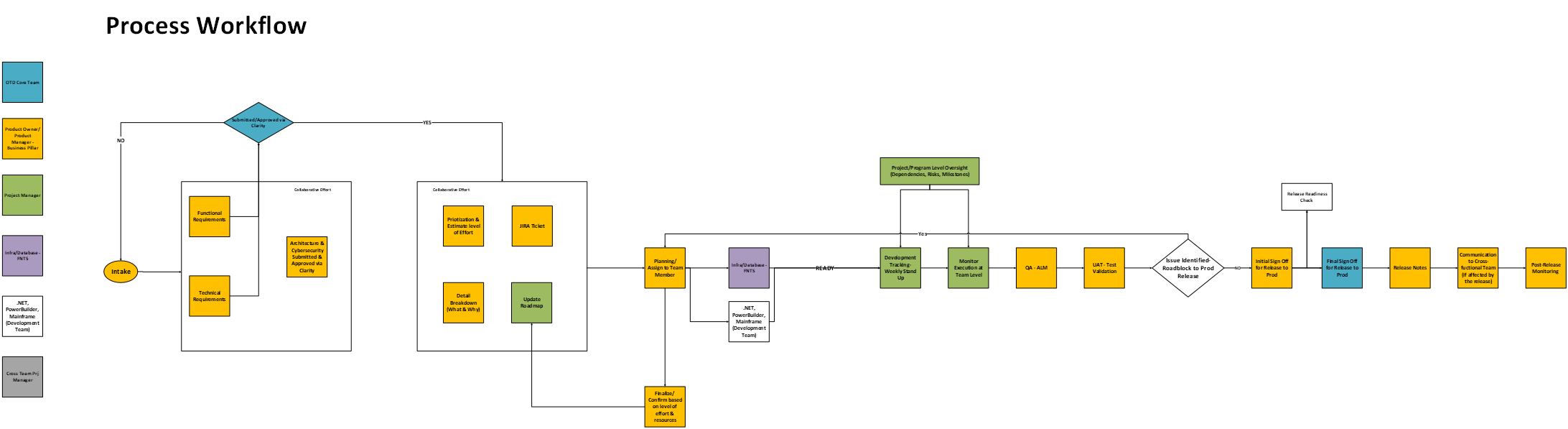
Team Workflow Optimization
Shifted team focus from meetings to execution by implementing a new workflow and communication strategy. Resulted in high-performing, self-directed teams with improved team satisfaction.
Work and capstone projects
Shifted team focus from meetings to execution by implementing a new workflow and communication strategy. Resulted in high-performing, self-directed teams with improved team satisfaction.
Applied IBM Enterprise Design Thinking to map the homeowner-to-service-provider ecosystem, conduct customer discovery, and prototype a solution addressing why only 31% of homeowners find qualified pros "very easy" to locate.
Computed company-wide and divisional WACCs for Amazon's three segments, applied EVA analysis to reveal that AWS alone drives $24.1B in value creation while both retail divisions destroy value, and delivered strategic recommendations for capital reallocation.
Investigated Woolworths Group's record FY23 profits using five years of comparative financial data against Coles, determined profits stemmed from volume growth rather than margin expansion, and authored a C-suite disclosure strategy memo and press release advising proactive investor communication.
Identified $866K in annual savings for a regional meal-kit startup by applying EOQ modeling across four western states and designing a centralized distribution network. Delivered a 3-phase national growth roadmap with a phased insourcing strategy projected to reduce per-unit fulfillment costs by 73%.
Built a full ROPI intrinsic valuation model for The Hershey Company using 10 years of audited financials and a 5-year forecast, estimating a WACC of 5.61% and an intrinsic value of $301.16 per share. Concluded HSY was significantly undervalued at its $168.52 market price, with all sensitivity scenarios confirming a 41–46% discount to fair value.
Analyzed Airbnb's asset-light platform model through core economics frameworks — decomposing its dual-sided revenue structure, fixed vs. variable cost dynamics, price elasticity across five demand segments, and network-effect moat. Concluded the model structurally outperforms traditional hospitality on margins and recommended long-term stays and corporate travel expansion to reduce dependence on highly elastic leisure demand.